Media buying for iGaming lives or dies on one question: does the traffic register and deposit, or does it just click? Impressions, sessions, and cheap clicks look good in a dashboard and mean nothing at the cashier. With the iGaming advertising market projected at 101 billion USD in 2026, most of that spend still chases vanity volume that never turns into a first time deposit.
This is a practitioner’s map of every major traffic source for iGaming affiliates and buyers: how each one works, which GEO tier it fits, and the registration to FTD rate and cost per acquisition you can realistically expect. The lens throughout is the one that matters to a media buying desk: which traffic delivers registrations and deposits, not just cheap clicks.
Clicks are vanity, FTDs pay the bills
The only conversion metric worth optimizing against is registration to first time deposit. Two channels can send identical click volume and produce wildly different revenue because their intent, targeting, and trust profiles differ. Benchmarks bear this out. Across the market, reg to FTD conversion by channel runs roughly 18 to 35 percent for PPC, 15 to 30 percent for SEO, 10 to 22 percent for influencer traffic, and 6 to 14 percent for paid social.
Search traffic converts hardest because the user already declared intent by typing a query. Paid social sits at the bottom of that range because you are interrupting a feed, not answering a question. That single spread, roughly 5x between the top and bottom of the funnel, is the reason channel selection beats bid tweaking every time. If you want the full model behind deposit economics, our breakdown of player acquisition cost in iGaming walks through how CAC compounds across the funnel.
Traffic sources at a glance
Here is the whole landscape in one view. Treat the ranges as guidance for planning, not guarantees. Actual numbers move with GEO, offer, creative, and landing page quality.
| Channel | GEO tier fit | Reg to FTD | CAC per FTD (USD) |
|---|---|---|---|
| PPC / paid search | Tier-1, Tier-2 | 18 to 35% | 15 to 45 (paid) |
| SEO / organic | Tier-1 | 15 to 30% | 20 to 40 at maturity |
| Influencer / streamer | Tier-1 to Tier-3 | 10 to 22% | deal dependent |
| Paid social | Tier-1, Tier-2 | 6 to 14% | 15 to 45 (paid) |
| Push and pop-under | Tier-2, Tier-3 | not benchmarked | 15 to 45 (paid) |
| Native | Tier-1, Tier-2 | not benchmarked | 15 to 45 (paid) |
| Email and SMS | All tiers (owned) | not benchmarked | low, owned list |
| Telegram | Tier-2, Tier-3 | not benchmarked | 15 to 45 (paid) |
| Programmatic retargeting | Tier-1, Tier-2 | not benchmarked | 15 to 45 (paid) |
| Affiliate network deal | All tiers | varies | 50 to 400 (per FTD) |
Two things jump out. Affiliate deals carry the widest and highest CAC band, 50 to 400 USD per FTD, because you are paying for delivered depositors and warm audiences rather than raw inventory. Direct paid buys land at 15 to 45 USD per FTD, and mature SEO settles at 20 to 40 USD, according to 2026 casino acquisition CAC benchmarks. Cheaper per acquisition does not mean better. It depends on player quality, which we return to below.

Search traffic: highest intent, highest friction
Search is the sharpest intent signal in the funnel and also the most compliance heavy channel you can run. That tension defines how you play it.
SEO and organic
Organic search is the slowest channel to spin up and the only one that gets cheaper over time. Expect six months or more before rankings compound, but once a page ranks, the marginal cost of each new visitor trends toward zero. That is why time to result data describes SEO as slow but deflationary, while paid search is fast but a constant burn. At maturity SEO delivers a 15 to 30 percent reg to FTD rate at a 20 to 40 USD CAC, which is strong for a channel with effectively fixed content cost.
SEO fits Tier-1 best, where search volume is deep and users trust organic listings over ads. The catch is timeline and the fact that a single algorithm update can reset your position. Anyone building on organic should read our deep dive on the role of SEO in iGaming affiliate marketing before committing a quarter of runway to it. Treat SEO as an asset you own, not a tap you rent.
PPC and paid search
Paid search flips every SEO tradeoff. It turns on in a day, converts at the top of the range (18 to 35 percent reg to FTD), and stops the moment you stop paying. It also carries the highest compliance friction of any channel. Gambling keyword policies on Google and Microsoft are strict, GEO gated, and enforced hard, so a lot of iGaming paid search runs through certified accounts, brand terms, or adjacent non gambling keywords.
The economics are clean when it works: 15 to 45 USD CAC on high intent clicks. The risk is account bans and rising CPCs in competitive Tier-1 GEOs. Because policy exposure is real, structure and creative discipline matter more here than anywhere else. Our guide to running compliant paid ads in iGaming covers the account setup and disclosure practices that keep search campaigns alive.
Push and pop-under: Tier 2 and Tier 3 volume
Push notifications and pop-unders (PropellerAds is the standard supply here) are volume plays. CPCs are low, inventory is enormous, and audiences skew toward Tier-2 and Tier-3 markets where user acquisition costs are a fraction of Tier-1. You will not match search intent, so raw conversion is lower, but the math often works because traffic is cheap enough to absorb a weaker reg to FTD rate.
These formats reward aggressive testing and fast creative rotation. Run them where GEO tiering logic puts them: Tier-2 and Tier-3, where low CPC and lighter competition let volume do the work. Push and pop are the wrong tool for premium Tier-1 acquisition, where trust and compliance carry more weight than reach.
Native advertising: scaled discovery at medium friction
Native (Taboola and PropellerAds among the main suppliers) blends advertorial style content into publisher feeds. It sits in the middle of the friction spectrum: harder to get approved than push, easier than search. The strength of native is pre-sell. You can warm a cold user with a content angle before the offer, which lifts reg to FTD relative to a raw banner.
Native scales across Tier-1 and Tier-2 and pairs naturally with the SEO friendly content assets you already own. It is a workhorse for affiliates who can write a hook, not just buy a click.
Paid social: reach with a compliance ceiling
Meta, TikTok, X, and Snapchat offer the deepest audiences on the internet and the lowest reg to FTD rate on this list, 6 to 14 percent. You are interrupting entertainment, not intercepting intent, so a large share of clicks never deposit. Compliance friction is medium: gambling creative is restricted, GEO gated, and frequently rejected, which pushes a lot of iGaming social through indirect angles and whitelisted assets.
Paid social earns its place on brand awareness, top of funnel warming, and remarketing pools rather than direct FTD hunting. At 15 to 45 USD CAC it can pencil out, but only with tight creative testing and a landing experience built to recover low intent traffic. Run it as a feeder, not a closer.
Influencer and streamer traffic
Casino streamers and influencers on Twitch and YouTube convert surprisingly well, 10 to 22 percent reg to FTD, because the audience arrives pre-trusted by a personality they follow. That trust is the entire value proposition. It is also fragile: one bad promotion burns the channel, and platform policy on gambling content shifts often.
Deal structures here range from flat fees to full revenue share, which is why CAC is deal dependent rather than a fixed band. Influencer traffic can serve any tier depending on the creator’s audience, and it tends to deliver higher lifetime value players because the referral carries social proof. When you weigh streamer deals, model them against player lifetime value and traffic quality rather than upfront cost alone.
Email, SMS, and owned audiences
Email and SMS are the cheapest traffic you will ever run because you already paid to build the list. There is no per click auction. The constraint is inventory: your list is finite, and consent rules (opt in, unsubscribe handling, GEO specific regulation) are non negotiable in a regulated niche. Done right, owned channels post the lowest effective CAC of any source and reactivate dormant depositors at near zero marginal cost.
The strategic move is to treat every paid acquisition as a list building event. Convert a share of push, native, and social traffic into owned contacts, and you compound cheap reactivation on top of expensive first touch. That is a core lever in our playbook on maximizing earnings from casino affiliate marketing.
Telegram: the Tier 2 and 3 dark horse
Telegram has become a serious acquisition channel across Tier-2 and Tier-3 GEOs, where the app dominates messaging and gambling content faces less platform hostility than on Western social networks. Channels, bots, and paid placements in large communities deliver engaged, low cost traffic. It is under indexed by buyers who default to Meta and Google, which is exactly why the cost advantage still exists.
Treat Telegram like push in one respect: volume and low CPC in emerging markets, weaker per user intent than search. The upside is community trust, which lifts conversion above cold display when the placement is credible.
ASO and in-app traffic
App store optimization and in-app advertising target mobile first users, which increasingly means the majority of iGaming players in most GEOs. ASO is the mobile cousin of SEO: slow to build, compounding once ranked, and effectively free traffic at maturity. In-app buys, by contrast, are paid inventory that behaves like display, cheap reach with intent you have to manufacture through creative and pre-sell.
Both matter because mobile is where the deposits happen. A desktop first acquisition strategy in 2026 leaves the largest slice of the market on the table.
Programmatic retargeting
Retargeting is not a top of funnel source, it is a conversion multiplier. Programmatic remarketing chases users who registered but never deposited, or who abandoned a deposit flow, and pulls them back at a fraction of first touch cost. Because the audience is already warm, retargeting posts some of the best economics in the stack, though it depends entirely on the volume your other channels feed into the pool.
Run it across Tier-1 and Tier-2 as a standing layer under everything else. Every channel above becomes more efficient when a retargeting net catches the reg to FTD drop off.

Match the channel to the GEO tier
The single most common media buying mistake is running the right channel in the wrong market. GEO tier dictates channel fit more than any other variable.
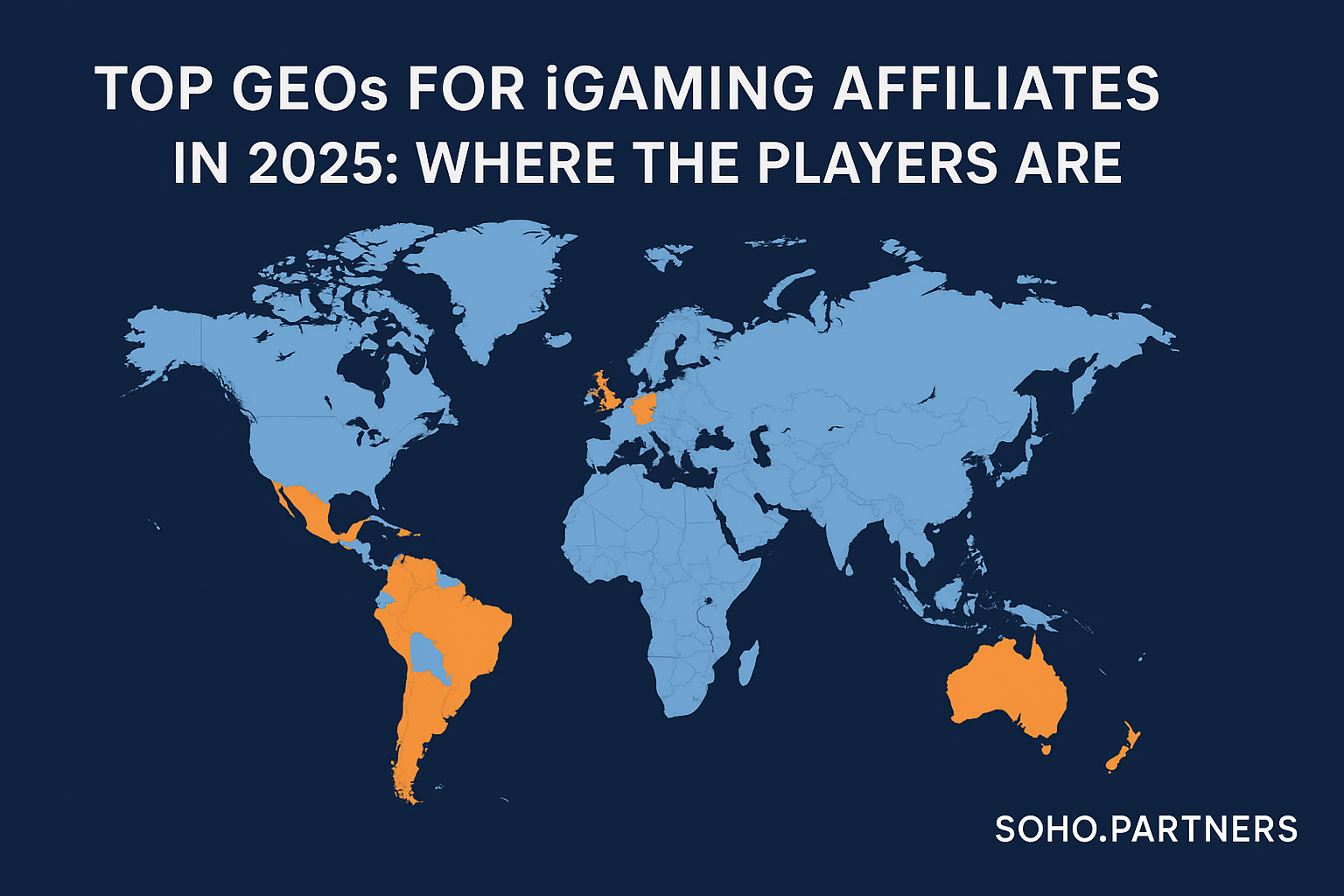
- Tier-1 (UK, Germany, Nordics, Canada, Australia): strict compliance, high CPCs, high trust thresholds. Lead with native and SEO, layer in tightly compliant paid search. These users respond to authority and content, not cheap interruption.
- Tier-2 and Tier-3 (LATAM, Southeast Asia, parts of Africa and Eastern Europe): lower CPCs, lighter competition, higher tolerance for aggressive formats. Push, pop-under, and Telegram carry the volume here at costs a Tier-1 buyer would not believe.
The distinction is not academic. A push campaign that prints money in Tier-3 will get rejected or bleed cash in Tier-1, and a premium SEO asset built for Germany is wasted effort in a low search, mobile first Tier-3 market. Our rundown of the top GEOs for iGaming affiliates maps which markets reward which channels, and it is the reference to check before you allocate a budget.
The time versus burn tradeoff
Every channel decision reduces to two clocks: how fast it produces, and whether the cost keeps burning. Paid channels (search, social, push, native) are fast and constant burn. Switch off the budget and traffic stops the same hour. Organic channels (SEO, ASO) are slow, six months or more to compound, but deflationary: the cost per visitor falls over time as the asset matures.
The professional answer is not to pick one. It is to run paid for cash flow now while building organic for margin later, sizing each against your runway. A desk that only buys paid is renting its entire pipeline. A desk that only does SEO starves for six months. Balance is the strategy, and the ratio shifts with how much runway and patience the operation has.
CAC, ROAS, and the attribution trap
Cheap CAC is a trap if the players do not stick. Blended return on ad spend in iGaming runs 3x to 6x on 90 day net gaming revenue, and revenue share consistently outperforms flat CPA over the long term because it aligns payout with player value rather than a one time bounty. That is the core finding behind the 2026 ROAS benchmarks, and it reframes the whole CAC conversation: a 50 USD affiliate FTD that deposits for two years beats a 15 USD paid FTD that churns in a week.
Which deal structure captures that value is its own decision. We break down the tradeoffs in detail in CPA versus RevShare versus Hybrid, but the short version is that flat CPA optimizes for volume and cash today, while revenue share optimizes for margin over the player lifetime.
There is also an attribution problem worth naming. Affiliates sometimes get credited for depositors that an operator’s own paid ads warmed up first, which inflates affiliate performance and distorts channel comparisons. If your last click model hands full credit to the final touch, you will overpay one channel and starve another. Whether you run traffic through a private or public iGaming network changes how much attribution transparency you get, and clean attribution is the difference between scaling a real winner and scaling a rounding error.
How SOHO thinks about traffic that converts
The channel does not matter. The deposit does. A media buying operation earns its keep by matching the right source to the right GEO tier, structuring the deal so payout tracks player value, and reading attribution honestly enough to double down on what actually delivers FTDs. Everything in this guide is a lever toward one outcome: registrations that fund, not clicks that flatter a report.
Frequently asked questions
Which traffic source has the highest reg to FTD conversion?
PPC and paid search lead at 18 to 35 percent, followed by SEO at 15 to 30 percent, because both capture users who already showed intent through a search query. Influencer traffic converts at 10 to 22 percent on the strength of creator trust, while paid social trails at 6 to 14 percent since it interrupts a feed rather than answering a query.
What is a realistic CAC per FTD in iGaming?
Direct paid channels land around 15 to 45 USD per FTD, mature SEO settles at 20 to 40 USD, and affiliate deals range from 50 to 400 USD per FTD depending on player quality and deal terms. These are planning ranges, not guarantees, and the higher affiliate cost often buys higher lifetime value depositors rather than a worse deal.
Should I prioritize SEO or paid traffic?
Run both, sized to your runway. Paid traffic produces immediately but burns constantly, so it turns off the moment the budget stops. SEO takes six months or more to compound but gets cheaper over time and becomes an asset you own. Use paid for cash flow now and build organic for margin later.
How do I match a traffic source to a GEO?
Tier-1 markets reward native advertising and SEO plus tightly compliant paid search, because users there expect trust signals and compliance is strict. Tier-2 and Tier-3 markets favor push, pop-under, and Telegram, where low CPCs and lighter competition let volume drive results. Running an aggressive format in a premium GEO, or a premium content play in a low search market, wastes budget either way.
New to media buying or iGaming affiliate marketing? Start with SOHO Academy, our free course in three levels, from the basics to scaling campaigns.