Most affiliate managers open with a rate card and hope you accept it. That rate card is a starting position, not a ceiling. If you run real volume in iGaming, the gap between the deal you are offered and the deal you can close is often the difference between a channel that breaks even and one that funds your next three campaigns. This guide is written for media buyers and affiliates who already move traffic and want the specifics: what the numbers look like by market tier, which clauses quietly erode your effective payout, and the leverage that actually moves an operator off their opening line.
One idea runs through everything below: you negotiate from evidence, not from hope. Operators respond to first-time deposit counts, retention curves, and a clean traffic history. They do not respond to “can you do better.” Bring data, know the benchmark, and read every clause before you sign. The affiliate who walks in with a media kit and a benchmark table closes a different deal than the one who walks in with a portfolio and a smile.
Know the benchmark before you open the conversation
You cannot negotiate a number you cannot compare against. Before any call, anchor yourself to published ranges so you know whether an offer is generous, at market, or an insult dressed up as a bonus. The three core commission structures, cost per acquisition (CPA), revenue share (RevShare), and hybrid, each carry their own benchmarks and each rewards a different kind of traffic. Our breakdown of how CPA, RevShare, and hybrid deals compare is worth reading before you decide which battle to pick.
Cost per acquisition benchmarks by tier
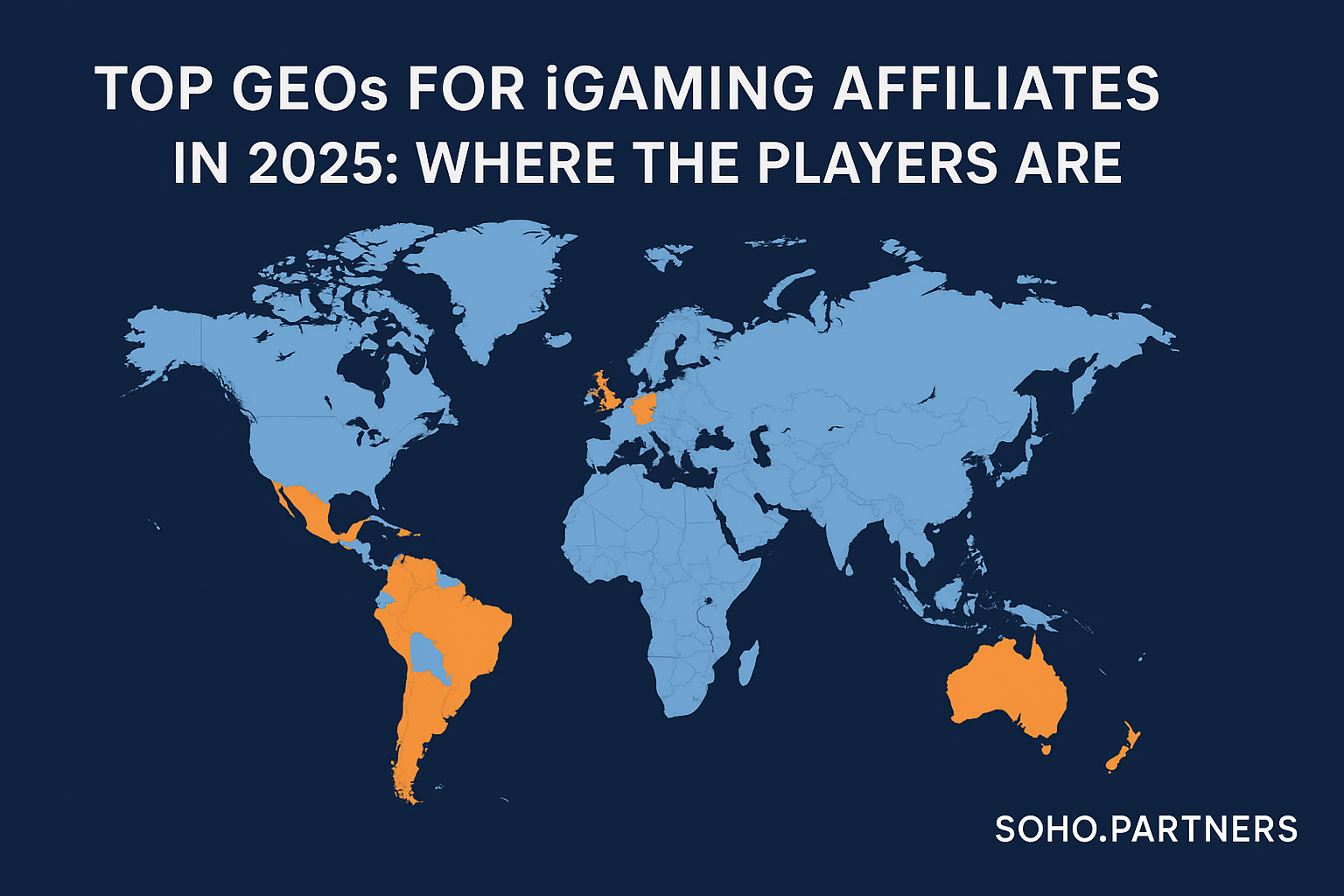
Cost per acquisition pays a flat amount for each qualifying first-time depositor (FTD). The number swings hard by geography. On tier-1 markets (United States, United Kingdom, Germany, Canada, Australia), direct programs pay roughly EUR 400 to EUR 650 per acquisition, while networks typically cap the same traffic at EUR 50 to EUR 300. That gap is the single strongest argument for going direct wherever your volume justifies it. Further down the ladder, tier-2 markets such as Turkey and Eastern Europe run EUR 50 to EUR 150 per FTD, and tier-3 markets like India, Indonesia, and much of Africa sit at EUR 20 to EUR 60 per FTD on a volume-first logic. Brazil sat in the tier-2 band until it banned betting on 25 September 2026.
| Tier | Example markets | Direct CPA range (per FTD) | Deal logic |
|---|---|---|---|
| Tier-1 | US, UK, Germany, Canada, Australia | EUR 400 to 650 | High payout, high competition, strict quality checks |
| Tier-2 | Turkey, Eastern Europe | EUR 50 to 150 | Balance of payout and available volume |
| Tier-3 | India, Indonesia, Africa | EUR 20 to 60 | Volume-oriented, thin per-head margin |
These are indicative ranges. They vary by operator, GEO, and the quality of the players you send, so treat them as anchors rather than promises. The tier-1 ceiling only holds if your player quality holds. This is exactly where knowing your own player acquisition cost matters: a EUR 500 CPA is only strong if you are buying those depositors for materially less, and the arithmetic shifts market by market.
Revenue share, and why casino and sportsbook differ
Revenue share pays a percentage of net gaming revenue (NGR), the operator’s take after player winnings and a defined set of costs. Standard casino RevShare runs 25 to 45 percent of NGR, with premium partners reaching 40 to 50 percent and above, while sportsbook deals sit lower at 20 to 35 percent because betting margins are thinner and more volatile. Across the market as a whole, the workable band is 20 to 50 percent of NGR, and anything below 20 percent struggles to attract quality affiliates at all.
RevShare is a long game. It only pays if the operator retains the players you send, which is why your leverage here ties directly to player lifetime value. Send depositors who play once and vanish, and 45 percent of nothing is still nothing. A lower percentage on a book of players who stick can out-earn a headline rate on churn.
Hybrid, the structure that hedges both sides
Hybrid combines a smaller upfront CPA with an ongoing RevShare, and it is the default ask for serious media buyers who want cash flow now and upside later. Typical hybrid terms land around EUR 95 to EUR 140 CPA plus 25 to 30 percent RevShare, with entry-level hybrids closer to EUR 55 to EUR 95 CPA plus 20 to 25 percent. On tier-1 specifically, a common opening looks like USD 80 to USD 120 CPA plus 20 to 25 percent RevShare, adjusted for cookie length, qualification terms, and clawback.

The underrated feature of hybrid is downside protection. The CPA portion stays untouched even when players generate negative revenue, because negative carryover only bites into the tail RevShare. In practice that makes hybrid a form of insurance against a cold cohort: you keep the acquisition payment regardless, and only the ongoing share absorbs a bad run. For a media buyer testing a new operator or a new GEO, that guaranteed floor is often worth more than a slightly richer pure-CPA headline.
The clauses that quietly eat your margin
Headline rates are marketing. The clauses decide what actually lands in your account. Two affiliates on identical “40 percent RevShare” deals can earn wildly different amounts depending on how NGR is defined, whether losses carry over, and how long the operator can reverse a payout. Read this section as the fine print you negotiate before you celebrate the percentage, because a great rate on a bad contract is a bad deal.
The NGR formula is the hidden variable
Net gaming revenue is not gross revenue. Operators deduct a list of costs before your percentage applies, commonly payment processing, bonus costs, jackpot contributions, licensing fees, and platform fees. Depending on how aggressive that deduction stack is, a nominal 40 percent share can behave like an effective 30 percent or worse once every fee is stripped out first. Always ask for the exact NGR formula in writing and model your effective rate, not the headline one. The itemized deductions you should expect to see include:
- Payment processing and transaction fees
- Bonus and free-bet costs granted to players
- Progressive jackpot contributions
- Licensing and regulatory levies
- Platform and game-provider fees
A generous percentage sitting on a heavily deducted base loses to a modest percentage on a clean one. When you compare two offers, normalise both to the same NGR definition first, then compare the numbers. Managers rarely volunteer how thin their post-deduction base runs, so make the formula an explicit line item in the conversation.
Negative carryover and no-carryover
Negative carryover means a losing month rolls forward and eats into your next month’s earnings before you get paid anything. In regulated markets a monthly or quarterly reset is standard, though many modern programs have dropped carryover entirely. No-carryover (NCO) is negotiable, and it is one of the highest-value asks on the table because it caps your downside to a single period. If an operator will not remove carryover outright, push for a monthly reset instead of a quarterly one, which shortens the window in which a bad run keeps following you. The player who wins big in January should not still be draining your March payout.
Clawback windows and qualification terms
A clawback lets the operator reverse a payout if a player turns out to be fraudulent or fails to qualify. Standard windows run 60 days for CPA, with RevShare handled on a rolling basis. The other half of qualification is the FTD definition itself: minimum deposit, wagering requirement, and the registration-to-deposit path all decide whether a player actually counts as a qualified first-time depositor. A tight qualified-FTD definition paired with a long clawback window can silently disqualify a chunk of the traffic you already paid to acquire. Nail these terms down before volume ramps, not after your first invoice comes back lighter than expected.
Leverage: what actually moves the number
Operators do not raise offers out of goodwill. They raise them when you show that your traffic is worth more than their default assumes. Everything in this section converts into a higher rate only when you can back it with numbers, which is the whole point: leverage in this business is quantitative, not persuasive.
Data is your strongest card
The affiliates who close the best deals walk in with a media kit: FTD volume, retention curves, average revenue per user (ARPU), registration-to-deposit rate, and earnings per click (EPC) broken out by geography. If you already track your core affiliate performance metrics, you have the raw material sitting in your dashboard. Proof of quality is what unlocks the top of every range: reaching 40 to 45 percent RevShare and above requires evidence of lifetime value and retention, not a promise of volume. Bring at least these to the table:
- First-time deposit volume, by month and by GEO
- Retention and lifetime value figures for recent cohorts
- Average revenue per user and registration-to-deposit rate
- Earnings per click, so the operator can size your traffic quality

Volume-based escalation
Escalation turns your growth into an automatic raise. A common CPA structure starts at a base of EUR 150 per FTD, rising to EUR 180 at 50 FTDs per month and EUR 220 at 100 FTDs, resetting monthly. On the RevShare side, hitting 21 or more FTDs per month typically opens the door to renegotiating your tier. Get the escalation ladder written into the contract so your raise is contractual rather than a favor you have to re-request every quarter. If you are building toward that kind of scale, our guide to maximizing your casino affiliate earnings covers how to structure the growth around these triggers.
Direct versus network
The tier-1 gap between direct and network payouts, roughly EUR 600 direct against a EUR 300 network cap, is the clearest case for building direct relationships once your volume justifies the effort. Networks earn their cut with softer qualification, faster onboarding, and access to programs you could not reach on your own, which is precisely why many buyers still route through them. Weighing the tradeoffs between private and public iGaming networks is worth doing per campaign, because the right answer changes with your volume, your cash-flow needs, and how much account management you want to handle yourself.
Do not overlook tier-2 and tier-3 arbitrage
The biggest payout is not automatically the best deal. Effective margin is payout minus acquisition cost, and cheaper markets frequently win that math. A USD 75 CPA against a USD 0.10 cost per click (CPC) beats a USD 400 CPA against a USD 2.00 CPC, because the ratio of revenue to traffic cost is what compounds across a campaign. Tier-2 and tier-3 markets, where competition and click prices sit lower, often out-earn tier-1 on a per-dollar-in basis even though the headline CPA is a fraction of the size. Model the full funnel, not the sticker price, and the “smaller” offer can turn out to be the fatter one.
Put every term in writing
Verbal deals drift. Rates get “adjusted,” carryover quietly reappears, escalation ladders get forgotten by the time you hit the milestone. Every number you negotiate belongs in a signed agreement: CPA, the RevShare percentage, the exact NGR formula, carryover treatment, the clawback window, the escalation triggers, and the qualification terms. Written terms are what stop silent changes and give you standing when a payout does not match what was promised on the call. The checklist below is the minimum that should appear in the contract before you send a single click:
- CPA amount and the qualified-FTD definition behind it
- RevShare percentage and the full NGR formula with deductions listed
- Carryover treatment (monthly reset, quarterly reset, or none)
- Clawback window for CPA and the rolling basis for RevShare
- Volume-based escalation triggers and the resulting rates
- Attribution window and cookie length
Treat the contract as the deal. Everything said on the call is just the draft. The operators worth working with will put it in writing without a fight, and the ones who resist are telling you something useful about how the relationship will run once your volume is on the line.
Frequently asked questions
What is a realistic CPA to ask for on tier-1 traffic?
Direct tier-1 programs commonly pay EUR 400 to EUR 650 per first-time depositor, while networks tend to cap the same traffic at EUR 50 to EUR 300. Where you land depends on demonstrated player quality, the specific GEO, and the vertical. These are indicative ranges that vary by operator, market, and traffic quality, so use them as anchors for the conversation rather than guarantees you can hold an operator to.
Is RevShare or hybrid better for a media buyer?
It depends on your cash-flow needs and your confidence in retention. Pure RevShare, in the 20 to 50 percent of NGR band, rewards long-term player quality but pays nothing upfront. Hybrid pairs a smaller CPA with ongoing RevShare, so you get immediate cash plus long-term upside, and the CPA portion stays insulated from negative carryover. Most volume buyers default to hybrid for exactly that balance.
Can I really get negative carryover removed?
Often, yes. Many modern programs have already dropped carryover, and no-carryover is one of the more negotiable terms, especially when you bring volume and clean traffic. If an operator will not remove it entirely, pushing a quarterly reset down to a monthly one still meaningfully limits how far a losing period can chase you into the next payout.
What data do I need before negotiating?
Bring first-time deposit volume, retention and lifetime value figures, average revenue per user, registration-to-deposit rate, and earnings per click by geography. Reaching the top of any RevShare range, 40 to 45 percent and above, generally requires proof of quality and retention rather than a volume promise. The stronger your evidence, the more room you have to move an operator off their opening rate.
New to media buying or iGaming affiliate marketing? Start with SOHO Academy, our free course in three levels, from the basics to scaling campaigns.